
How IoT Gateway Works: A Technical Breakdown

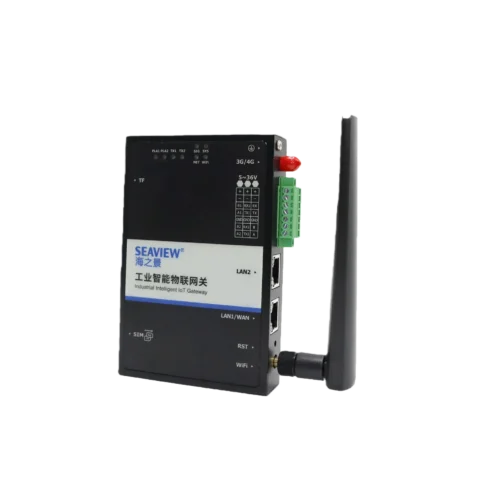
In my decade of experience designing industrial networks, I have seen many projects fail due to poor connectivity. The bridge between physical sensors and digital intelligence is the most critical link. Understanding how iot gateway works is the first step toward building a resilient system.
An IoT gateway acts as a universal translator and security guard for your data. It gathers signals from diverse sensors and translates them into a single language for the cloud. Without this device, most industrial equipment would remain isolated and silent.
Many engineers face the challenge of connecting legacy machinery to modern analytics platforms. These machines often speak older protocols that cloud servers cannot understand. I will explain the precise mechanisms that allow these gateways to solve this problem and streamline your operations.
The Core Mechanism of IoT Gateways
To understand how iot gateway works, you must view it as a multi-stage processor. It sits at the intersection of local device networks and the wider internet. Its primary job is to manage the flow of information in both directions.
First, the gateway establishes a local connection with sensors and actuators. This often involves low-power wireless signals or hardwired industrial connections. Once the data arrives, the gateway performs “normalization” to ensure consistency across different data types.
According to the ISO/IEC 30141 standard, this architecture is essential for IoT trustworthiness. The gateway acts as the “Edge” where physical reality meets digital logic. It ensures that only relevant, high-quality data reaches your central management system.
Connecting Sensors and Actuators
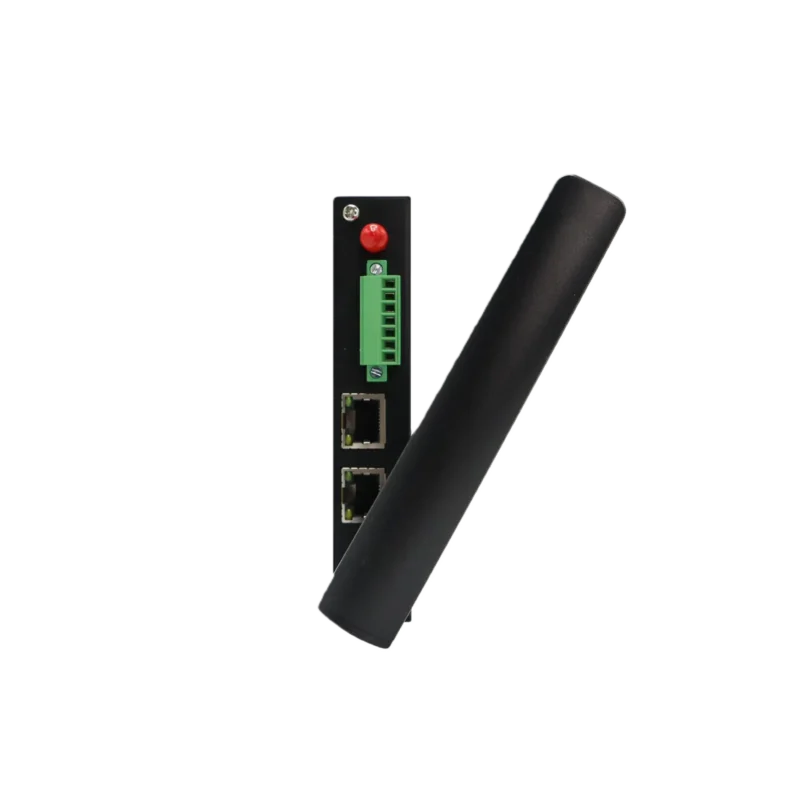
The gateway uses various physical interfaces to talk to local devices. I often see installations using RS-232, RS-485, or Ethernet ports for wired setups. For wireless environments, it might use Wi-Fi, Bluetooth, or Zigbee.
Each of these sensors sends raw electrical signals or small data packets. The gateway must be robust enough to handle these inputs simultaneously. This initial connection is the foundation of the entire data pipeline.
Filtering and Aggregating Local Data
Sensors can generate thousands of data points every second. Sending all this raw data to the cloud would be incredibly expensive and inefficient. The gateway filters out the “noise” and only keeps significant changes.
For example, a temperature sensor might report 25°C every second for an hour. The gateway can aggregate this into a single hourly average. This process significantly reduces bandwidth usage and saves on cloud storage costs.
Managing Connectivity and Uplinks
The final stage of the gateway’s internal process is the uplink. This is how the device sends processed information to the cloud or a private server. Most modern industrial gateways use 4G, 5G, or high-speed Ethernet for this purpose.
If the primary connection fails, a smart gateway can store data locally. This feature is known as “store and forward” logic. It ensures that no critical information is lost during a network outage.
Protocol Translation: The Language of the Edge
A significant part of how iot gateway works involves protocol translation. Industrial devices use specialized languages like Modbus, BACnet, or Profibus. Most cloud platforms, however, require data in formats like MQTT or CoAP.
The gateway serves as a real-time translator between these two worlds. It takes the specific industrial commands and wraps them in a web-friendly package. This allows your legacy factory equipment to communicate with modern AI and analytics tools.
IEEE standards emphasize the importance of interoperability in these communication layers. I have found that a gateway with broad protocol support is the most valuable asset. It prevents “vendor lock-in” and allows for much easier system scaling.
Translating Industrial Protocols to MQTT
MQTT is the most common language for cloud-based IoT applications. It is lightweight and designed for unreliable networks. The gateway converts complex Modbus registers into simple MQTT “topics.”
This translation happens in milliseconds to maintain real-time monitoring. It allows an operator in a different city to see the exact state of a machine. Without this translation, the cloud server would simply ignore the incoming data.
Standardizing Data Formats
Different sensors might report the same metric in different units. One sensor might use Celsius while another uses Fahrenheit. The gateway standardizes these into a uniform format before transmission.
This ensures that the cloud analytics software receives clean, comparable data. I advise my clients that clean data at the edge leads to better insights. Standardization is a silent but vital function of the gateway.
Handling Bi-Directional Communication
Gateways do more than just upload data from sensors. They also receive commands from the cloud to control local machinery. This bi-directional flow allows for remote operations and automated responses.
For instance, an AI in the cloud might detect a potential failure. It can send a command through the gateway to slow down a motor. This creates a closed-loop system that operates without human intervention.
Data Processing and Edge Computing
Modern gateways have evolved into “Edge Computing” devices. This means they can run complex logic and software locally. Understanding how iot gateway works today must include this local intelligence.
Edge computing allows for near-instant decision-making. If a pressure sensor hits a dangerous level, the gateway can trigger an alarm. Waiting for a cloud response might take too long in an emergency.
NIST guidelines suggest that moving processing to the edge improves system resilience. It reduces the dependency on a constant internet connection for safety-critical tasks. Local processing is what makes an IoT system truly “smart.”
Security and Communication Standards
Security is a major component of how iot gateway works in industrial settings. The gateway acts as a firewall between your internal equipment and the internet. It uses encryption to protect data as it travels across the web.
I always look for gateways that support VPNs and TLS encryption. These technologies ensure that unauthorized users cannot hijack your machinery. Security must be integrated into the hardware, not added as an afterthought.
NIST Special Publication 800-183 highlights the gateway’s role in establishing “trust zones.” By isolating sensors from the public internet, you reduce the attack surface. A secure gateway is your first line of defense against cyber threats.
Selecting the Right Gateway for Your Industry
Choosing the correct hardware depends on your specific environmental and data needs. You must determine if your installation requires cellular backup or high-performance edge processing. I believe the most important judgment standard is the gateway’s ability to handle your local protocol environment.
If you work in harsh environments, look for industrial-grade enclosures and wide temperature ranges. I suggest exploring specialized collections to find a match for your infrastructure. You can find high-performance options in the4G/5G Edge Computing Gateways collection.For specific high-speed industrial applications, the4G Edge Computing Gateway SIE2000B4Aprovides the robust processing power needed for complex tasks. Evaluating these technical specs ensures your gateway remains a reliable bridge for years.

Summary
Understanding how iot gateway works reveals its role as a bridge for data translation and security. It collects local sensor data, translates diverse protocols, and performs edge computing to save bandwidth. By prioritizing security and local processing, you ensure a reliable link between your industrial hardware and the digital cloud.
FAQ
1.Does an IoT gateway work without internet?
An IoT gateway can work locally without an active internet connection. It can collect data and run local edge computing logic to control machinery. However, it cannot send updates to the cloud or receive remote commands until the connection is restored.
2.How does an IoT gateway handle security?
It handles security by acting as a buffer between sensors and the internet. Most use data encryption (TLS/SSL), VPNs, and internal firewalls. This prevents hackers from directly accessing sensitive industrial controllers or sensors.
3.What is the difference between a router and an IoT gateway?
A router simply moves data packets between networks. An IoT gateway performs protocol translation, data filtering, and edge computing. While a router is a general-purpose networking tool, a gateway is a specialized translator for IoT devices.
4.Why do I need protocol translation in a gateway?
Industrial machines often speak languages (like Modbus) that cloud servers cannot understand. The gateway translates these into web-friendly formats like MQTT or JSON. Without this, your machinery and your software would not be able to “talk” to each other.
5.Can one gateway support multiple types of sensors?
Yes, most industrial gateways support multiple interfaces like RS-485, Ethernet, and Wi-Fi simultaneously. This allows a single device to manage a variety of sensors, from temperature probes to high-speed cameras.
Reference Sources
NIST: NIST Special Publication 800-183 (Networks of Things)
IEEE: IEEE Standard for an Architectural Framework for the IoT
Britannica: Internet of Things and Edge Computing