
What Makes a Managed Industrial Ethernet Switch Better?

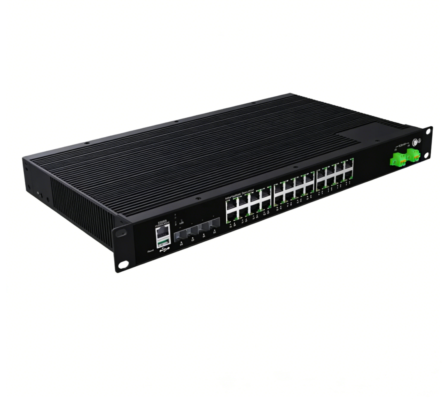
In my fifteen years of designing communication architectures for smart factories, I have seen many production lines stop due to simple network congestion. A standard unmanaged device acts as a simple bridge, but it lacks the intelligence to handle industrial stress. Transitioning to a managed industrial Ethernet switch is the most effective way to gain visibility into your floor-level data. These devices provide the tools necessary to configure, manage, and monitor your local area network (LAN). If your organization prioritizes uptime and data integrity, understanding the technical superiority of managed hardware is essential. This guide explores the functional pillars that make these switches a non-negotiable asset for modern industrial infrastructure.
Providing Deterministic Performance and Traffic Control
Industrial networks often host a mix of critical control signals and heavy video or administrative data. Without management, a high-bandwidth video stream can delay a time-sensitive PLC command. A managed industrial Ethernet switch uses sophisticated algorithms to ensure that the most important data arrives first.
Prioritizing Traffic with Quality of Service (QoS)
Quality of Service allows engineers to assign priority levels to different types of network traffic. According to IEEE 802.1p standards, high-priority packets are moved to the front of the transmission queue. Utilizing QoS within a managed industrial Ethernet switch ensures that critical control signals are never delayed by non-essential data. This deterministic behavior is vital for motion control and synchronized robotic applications.
Implementing VLANs for Network Segmentation
A flat network is a significant risk in a factory environment. Virtual Local Area Networks (VLANs) allow you to group devices logically regardless of their physical location. The use of VLANs on a managed industrial Ethernet switch prevents broadcast storms from spreading across the entire facility. By isolating sensitive control zones, you improve both performance and internal security.
Maximizing Uptime through Network Redundancy Protocols
In heavy industry, a single broken cable can cost thousands of dollars per minute in lost production. Unmanaged switches have no way to recover from a physical link failure. A managed industrial Ethernet switch incorporates redundancy protocols that create “fail-safe” paths for your data.
Rapid Spanning Tree Protocol (RSTP) and Beyond
Professionals rely on standards like IEEE 802.1D and 802.1w to prevent network loops while providing backup paths. If a primary fiber link is cut, the switch detects the failure and opens a secondary path in milliseconds. Configuring redundancy protocols on a managed industrial Ethernet switch provides the resilience needed for 24/7 continuous operation. This automated recovery happens so fast that the connected machinery often continues to run without noticing the fault.
Specialized Ring Redundancy for Industrial Sites
For even faster recovery, many industrial switches support proprietary or standard ring protocols like ERPS (Ethernet Ring Protection Switching). These structures are ideal for large-scale deployments like wind farms or long assembly lines. Selecting a managed industrial Ethernet switch with ring redundancy reduces the risk of total system failure caused by localized hardware issues.
Remote Diagnostics and Proactive Maintenance
Troubleshooting a network on a massive factory floor is a logistical nightmare without remote access. Managed devices provide real-time telemetry that allows technicians to identify issues from a central office.
Utilizing Simple Network Management Protocol (SNMP)
SNMP is the global language for network monitoring. It allows your management software to query the health of every port on the switch. Monitoring port utilization and error rates through a managed industrial Ethernet switch allows engineers to fix bottlenecks before they cause a crash. You can receive automated alerts if a temperature sensor exceeds its limit or if a port goes offline.
Port Mirroring for Deep Packet Inspection
When a mysterious communication error occurs between two machines, you need to see the actual raw data. Port mirroring clones the traffic from one port and sends it to a diagnostic tool. The diagnostic capabilities of a managed industrial Ethernet switch enable rapid root-cause analysis of complex industrial protocol errors. This reduces the “mean time to repair” (MTTR) significantly compared to unmanaged environments.
Strengthening Industrial Cybersecurity at the Edge
Industrial control systems are increasingly targeted by cyber threats. An unmanaged switch is a wide-open door for unauthorized access. A managed industrial Ethernet switch acts as the first line of defense at the network’s edge.
Implementing Port Security and MAC Filtering
You can configure a managed switch to only allow recognized devices to connect to specific ports. If an unauthorized laptop is plugged into a restricted zone, the switch can automatically disable the port. Enforcing port security on a managed industrial Ethernet switch prevents malicious actors from accessing your internal control network.
Support for Secure Management Protocols
Standard web interfaces (HTTP) send passwords in plain text, which is a major vulnerability. Managed switches support HTTPS and SSH for encrypted configuration sessions. Choosing a managed industrial Ethernet switch with robust encryption protects your administrative credentials from being intercepted on the shop floor. This aligns with the cybersecurity frameworks established by NIST for industrial control systems.
Selecting High-Performance Hardware for Complex Routing
How do you judge if a switch model is capable of handling your specific infrastructure? You must analyze the data throughput and the complexity of the network layers. If your network spans multiple subnets, a standard Layer 2 device may not be enough.
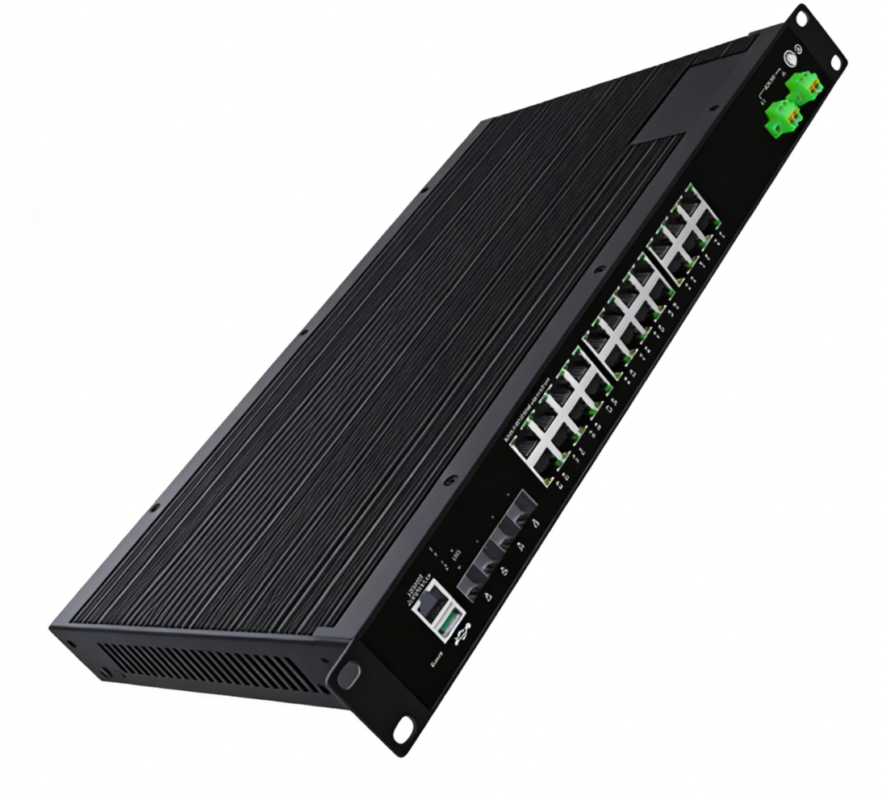
For large-scale facilities requiring high-speed data backbone, exploring a specialized Layer 3 managed switch is a strategic move. This specific model features 24 SFP ports and 4 10G uplinks, providing the massive bandwidth needed for modern smart factories. The right hardware choice acts as a long-term anchor for your digital transformation, ensuring your network scales with your automation needs.
When evaluating your options, prioritize hardware that combines high port density with industrial-grade thermal management. A switch that fails in the summer heat is a liability, not an asset. Investing in a high-capacity managed industrial Ethernet switch ensures that your core data pathways remain stable under maximum load.
Conclusion
A managed industrial Ethernet switch is better because it provides the critical redundancy, security, and traffic prioritization that unmanaged switches cannot offer. To ensure maximum production uptime, you must prioritize managed hardware that supports IEEE standards and offers remote diagnostic capabilities for proactive maintenance. By mastering your network through management, you build a resilient foundation that protects your machinery and your data.
FAQ
1. What is the main difference between a managed and unmanaged switch?
An unmanaged switch is “plug-and-play” with no configuration options, acting as a simple data bridge. A managed industrial Ethernet switch allows you to control traffic, set up security, and monitor performance. Managed switches are the only viable option for environments requiring high security or 100% uptime.
2. Can a managed industrial Ethernet switch help with industrial interference?
Yes, industrial-grade switches are built with superior electromagnetic compatibility (EMC) shielding. Furthermore, their management software allows you to monitor for “noise-induced” errors on specific ports. Selecting an industrial-grade switch ensures your data remains clean even near high-voltage motors.
3. Why is Layer 3 management better for large factories?
Layer 3 switches can handle routing between different subnets internally. This reduces the load on your main enterprise router and speeds up inter-departmental data flow. A Layer 3 managed industrial Ethernet switch is essential for connecting complex shop-floor subnets to the corporate IT network.
4. Is the setup of these switches too complex for a small team?
Most modern units offer user-friendly web interfaces and step-by-step setup wizards. While redundancy protocols require some training, basic management can be implemented quickly. The time spent on initial configuration is quickly repaid by the time saved during remote troubleshooting.
5. Does a managed switch improve the speed of the network?
It doesn’t increase the “line speed,” but it improves the “efficiency” by clearing congestion. By stopping unnecessary broadcast traffic and prioritizing control data, the network feels much faster. Efficient traffic management through a managed industrial Ethernet switch prevents lag in real-time control systems.
Reference Sources
IEEE 802.1Q – Bridges and Bridged Networks (VLAN Standards)
NIST SP 800-82 – Guide to Industrial Control Systems (ICS) Security
IETF RFC 3411 – Architecture for Describing Simple Network Management Protocol (SNMP) Frameworks