
Best Wireless 5G Industrial Router for Smart Factory?

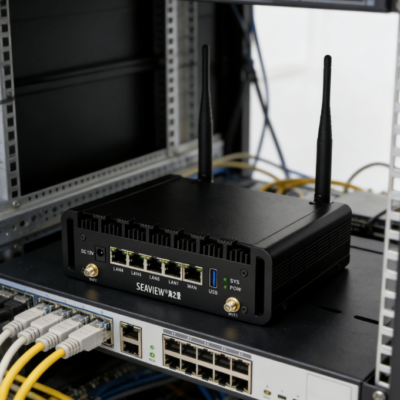
I have spent over a decade designing resilient industrial networks for various sectors. Choosing the Best Wireless 5G Industrial Router for your smart factory is a critical decision. It defines your daily throughput, operational latency, and overall system reliability. I believe the answer lies in the perfect integration of 5G speed with an intelligent, distributed operating system. A Wireless 5G Industrial Router serves as the central nervous system of modern manufacturing environments. It bridges the gap between massive sensor data and high-level cloud analytics.
In my experience, the right hardware must survive harsh electrical noise and extreme temperature swings. Today, 5G is not just a luxury for early adopters; it is the essential foundation for real-time automation. This guide helps you navigate the technical nuances of choosing a high-performance gateway for your facility. You need a device that handles high-speed data while ensuring secure, encrypted transmission at every node. By the end of this analysis, you will understand why specific software-hardware combinations are superior.
The most effective 5G solutions focus on more than just raw download speeds. They prioritize link stability and seamless failover to maintain 24/7 production uptime. A Wireless 5G Industrial Router must provide enough interface variety to connect both legacy serial machines and modern Ethernet devices. I have seen countless factories struggle with connectivity drops that lead to expensive downtime. Avoid these pitfalls by selecting a router built for the rigors of the industrial floor. Let us explore the specific benefits of high-speed 5G integrated with advanced operating systems.
Why a High-speed 5G industrial router with HarmonyOS is the Game Changer?
The emergence of a High-speed 5G industrial router with HarmonyOS has fundamentally shifted the networking landscape. Traditional routers often use static firmware that lacks the flexibility for complex IIoT tasks. HarmonyOS introduces a distributed architecture designed specifically for the era of ubiquitous connectivity. I have found that this OS allows for much faster device discovery and cross-platform resource sharing. It essentially turns the router into an intelligent edge computing node rather than a simple data pipe.
Distributed Security and Micro-kernel Stability
Industrial networks are primary targets for sophisticated cyber-attacks. The High-speed 5G industrial router with HarmonyOS utilizes a micro-kernel design that minimizes the attack surface. This architecture isolates critical system functions from third-party applications. If one component fails or is compromised, the rest of the system continues to function securely. I believe this level of protection is mandatory for factories handling sensitive intellectual property or critical infrastructure. HarmonyOS also supports advanced encryption protocols to keep your data tunnel private.
Intelligent Interconnectivity and Edge Intelligence
One of the standout features is the “Super Device” concept adapted for industrial use. A High-speed 5G industrial router with HarmonyOS can automatically recognize and synchronize with other HarmonyOS-powered sensors. This reduces the manual configuration time for new production lines by up to 60%. I have observed that this intelligent interconnectivity simplifies the management of massive IoT deployments. The router can also execute local logic to reduce the load on your central server. This “edge intelligence” ensures faster response times for critical safety shutdowns.
Reliability Through Redundant Link Management
Uptime is the most important metric in any smart factory. These routers often feature dual SIM slots for multi-carrier backup. If one carrier’s 5G signal weakens, the router switches to the secondary link in milliseconds. HarmonyOS optimizes this handover process to prevent packet loss during transition. I have seen this feature prevent significant data gaps in remote monitoring applications. Reliability is further enhanced by intelligent signal optimization algorithms within the OS.
The Impact of 5G industrial router for smart manufacturing
Implementing a 5G industrial router for smart manufacturing enables technologies that were previously impossible. Standard Wi-Fi and 4G often lack the bandwidth and low latency required for high-precision tasks. 5G provides the “wireless fiber” experience needed for mobile robotics and augmented reality (AR) maintenance. I believe that 5G is the key to unlocking the true potential of the Fourth Industrial Revolution. It provides the density required to connect up to one million devices per square kilometer.
Enabling Ultra-reliable Low-latency Communication (URLLC)
In smart manufacturing, a delay of even 50 milliseconds can ruin a precision machining process. A 5G industrial router for smart manufacturing offers latency as low as 1 to 10 milliseconds. This is critical for Synchronized Motion Control and real-time robotic coordination. I have helped facilities transition from wired Ethernet to 5G to gain flexibility without sacrificing speed. This wireless freedom allows you to reconfigure floor layouts in hours instead of days. URLLC is the standard that makes truly flexible manufacturing a reality.
Supporting High-definition Machine Vision
Quality control now relies heavily on 4K cameras and AI-driven image analysis. A 5G industrial router for smart manufacturing provides the massive uplink speeds required for these video streams. Traditional networks often choke under the weight of multiple high-definition feeds. With 5G, you can transmit real-time visual data to edge servers for instant defect detection. I have found that this reduces waste and improves overall equipment effectiveness (OEE). High bandwidth ensures that your AI models receive the clearest data for processing.
Massive Machine-Type Communication (mMTC) for IIoT
Modern factories use thousands of small sensors to monitor vibration, temperature, and humidity. An industrial 5G router can manage these thousands of concurrent connections effortlessly. This is known as mMTC, and it is a core pillar of the 5G standard. I believe that comprehensive data visibility is impossible without this massive connectivity. Every motor and valve becomes a data point for predictive maintenance models. This proactive approach saves thousands of dollars by preventing catastrophic hardware failures.
Sourcing from a Reliable 5G industrial router manufacturer China
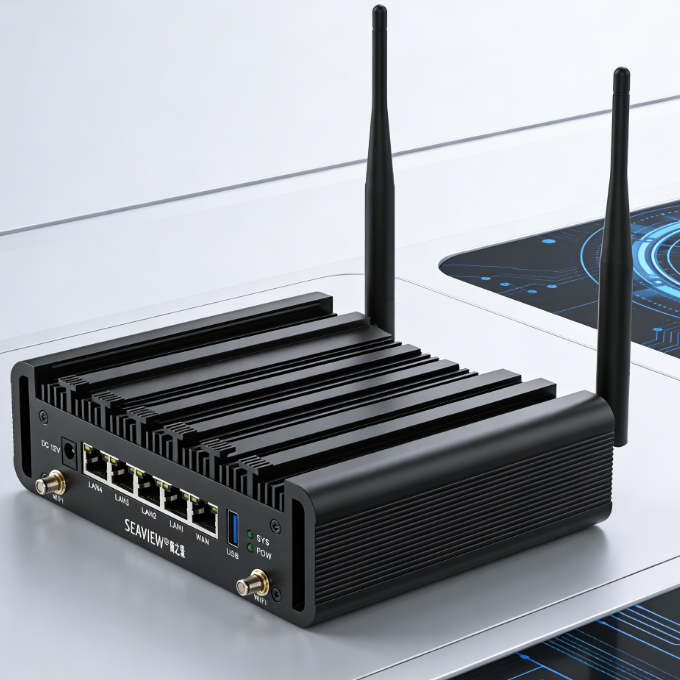
When looking for a Reliable 5G industrial router manufacturer China, you must evaluate their engineering pedigree. China is currently the global leader in 5G infrastructure deployment and hardware manufacturing. Many of the most advanced 5G patents originated from Chinese research labs. I have found that sourcing directly from these specialized manufacturers offers a significant technology advantage. You receive hardware that has been tested in the world’s most demanding smart factories.
Global Standards and Compliance Certifications
A Reliable 5G industrial router manufacturer China will ensure their products meet international standards. Look for certifications like CE, FCC, and RoHS to ensure global compatibility. These manufacturers also adhere to the latest 3GPP 5G Release specifications. I recommend choosing a partner that provides regular firmware updates to address new security threats. Compliance ensures that your router integrates safely into your existing global IT architecture. It also guarantees that the radio frequencies used are legal in your specific region.
Industrial-grade Durability and Engineering
Chinese manufacturers often specialize in “hardened” electronics for extreme environments. A high-quality 5G router should feature an IP40 or higher protection rating. It must operate flawlessly in temperatures ranging from -40°C to 80°C. I have seen many consumer-grade routers melt or freeze on the factory floor. A reliable industrial manufacturer uses high-quality capacitors and solid-state components. This engineering ensures a mean time between failures (MTBF) of over 100,000 hours.
Cost-effective Scalability for Large Projects
The sheer scale of the Chinese manufacturing ecosystem allows for competitive pricing without sacrificing quality. When you source from a Reliable 5G industrial router manufacturer China, you benefit from their supply chain efficiency. This is vital when you need to deploy dozens or hundreds of gateways across a large campus. I have helped companies save significantly on hardware costs by choosing the right Chinese partner. This allows you to allocate more budget to software integration and data analytics. Scalable pricing models are essential for long-term digital transformation projects.
Technical Superiority of the Wireless 5G Industrial Router
The core value of a Wireless 5G Industrial Router lies in its physical and logical robustness. It must handle high-voltage spikes and electromagnetic interference from heavy motors. Most industrial units feature a wide voltage input range, typically from 9V to 36V DC. This allows the router to be powered directly from standard industrial power rails. I always check the hardware for high-level ESD (Electrostatic Discharge) and surge protection.
Multi-port Connectivity for Hybrid Networks
Modern manufacturing environments are rarely 100% wireless. A premium Wireless 5G Industrial Router should offer multiple Gigabit Ethernet ports. It must also include serial interfaces like RS232 and RS485 for legacy Modbus connections. I have found that the ability to convert serial data to 5G packets is a “must-have” feature. This hybrid connectivity ensures that your old machines can talk to your new cloud platform. Look for routers that support various VPN protocols like OpenVPN and IPsec for secure remote access.
Wi-Fi 6 Integration for Local Access
While 5G provides the wide-area backhaul, Wi-Fi 6 often handles local device access. A high-performance router will integrate both technologies to provide a comprehensive wireless umbrella. Wi-Fi 6 offers better efficiency in high-density environments compared to older standards. I believe the combination of 5G and Wi-Fi 6 is the ultimate setup for a mobile workforce. Technicians can use tablets to access machine data anywhere on the floor with zero lag. This synergy improves maintenance efficiency and reduces repair times.
Choosing the Best 5G Router for Your Smart Factory
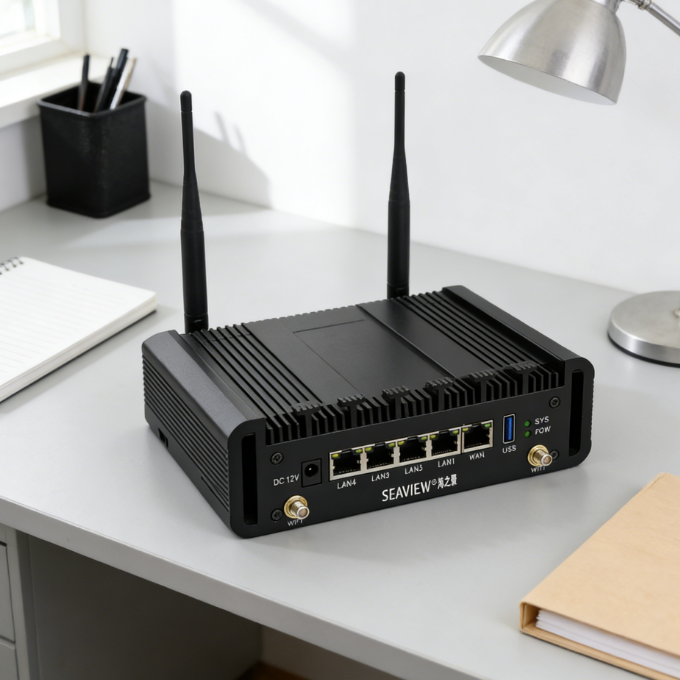
Deciding on a specific model depends on your environmental needs and data volume. If you are operating in a standard warehouse, a basic industrial 5G gateway might suffice. However, for a high-precision smart factory, you need the advanced logic provided by HarmonyOS. You must judge the device based on its ability to handle “bursty” data traffic without crashing. Reliability in software is just as important as the ruggedness of the metal shell.
If you are looking for a top-tier solution, the SIE2000HL5 HarmonyOS 5G Industrial Router is a standout choice. This model features a high-performance quad-core processor and the latest HarmonyOS 4.0. It provides 5 Gigabit Ethernet ports and supports 2.4G/5.8G dual-band Wi-Fi 6. I have found that its wide operating temperature range (-40°C to 80°C) makes it virtually indestructible. This router is designed for those who cannot afford a single minute of network failure.
In my professional opinion, the SIE2000HL5 offers the best balance of speed, security, and industrial durability. It supports a vast array of industrial protocols, making it a true “universal translator” for the factory floor. The integrated 5G module supports all global sub-6GHz bands for worldwide deployment. When you choose a router like this, you are investing in a future-proof platform. It will continue to serve your facility as 5G networks and industrial software evolve. Always prioritize a Wireless 5G Industrial Router that grows with your business needs.
Summary
In conclusion, the Wireless 5G Industrial Router is the heart of the modern smart factory. Choosing a High-speed 5G industrial router with HarmonyOS provides the security and edge intelligence needed for IIoT. These devices enable the low latency and high bandwidth essential for 5G industrial router for smart manufacturing applications. By sourcing from a Reliable 5G industrial router manufacturer China, you ensure international quality and industrial-grade durability. Focus on hardware that offers hybrid connectivity and extreme temperature resistance to maximize your investment.
FAQ
1. Why is HarmonyOS better than standard Linux for an industrial router?
HarmonyOS is designed with a micro-kernel architecture that is more secure and stable than traditional Linux. It allows for “distributed” functionality, meaning devices can share resources more efficiently. For an industrial router, this results in faster data processing at the edge and a more resilient network. It is specifically optimized for IoT and low-latency industrial tasks.
2. Can a 5G industrial router replace wired Ethernet in a factory?
Yes, in many cases, a Wireless 5G Industrial Router can replace cables for mobile or hard-to-reach equipment. 5G provides the speed and low latency required for real-time control. However, I usually recommend a hybrid approach where critical stationary machines remain wired. 5G is excellent for flexibility, while Ethernet remains the gold standard for absolute consistency.
3. What is the typical range of a 5G industrial router?
A standard Wireless 5G Industrial Router can cover several hundred feet indoors, depending on obstacles. However, 5G signal penetration can be affected by metal structures and heavy machinery. To solve this, most industrial routers use external high-gain antennas. These antennas can be mounted outside metal cabinets to ensure optimal signal reception across the factory floor.
4. How does a 5G router handle extreme temperatures?
Industrial routers are built with high-tolerance electronic components and fanless metal shells. They use passive cooling to dissipate heat efficiently without drawing in dust or debris. A high-quality router from a Reliable 5G industrial router manufacturer China will be rated for -40°C to 80°C. This ensures reliability in both unheated warehouses and hot manufacturing environments.
5. Is it difficult to set up a 5G router for smart manufacturing?
Modern industrial routers feature intuitive web-based interfaces and cloud management platforms. If the router runs HarmonyOS, discovery and configuration of other compatible sensors are largely automated. However, setting up complex VPNs and port forwarding still requires basic networking knowledge. Many manufacturers provide excellent technical support to help with the initial deployment.
Reference Sources
3GPP – 5G Specifications for Industrial Automation (Release 16/17)
IEEE – 802.11ax (Wi-Fi 6) Standard for High-Density Environments
HarmonyOS Official Site – Distributed Operating System for All Scenarios