
Title (English)Where to Buy Unmanaged Industrial Gigabit Switch?

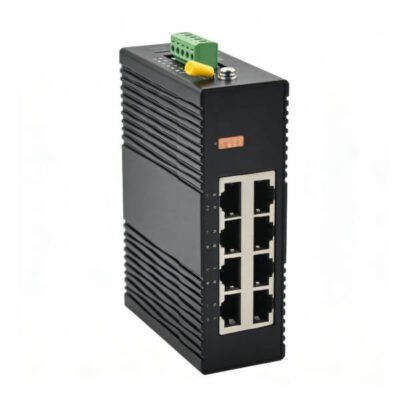
Industrial automation requires a robust networking backbone to handle high-speed data transmission. Standard commercial switches often fail in harsh factory settings due to dust and temperature fluctuations. I have spent years helping engineers select hardware that survives where consumer electronics die. An unmanaged industrial gigabit switch provides a plug-and-play solution for connecting PLC systems and IP cameras. Selecting the right unmanaged industrial gigabit switch ensures your network remains stable during critical production cycles.
Why Choose an Unmanaged Industrial Gigabit Switch for Automation?
Simplicity is the primary reason many engineers prefer unmanaged devices. These switches do not require complex software configuration to operate correctly. You simply plug in your Ethernet cables and the devices start communicating immediately. An unmanaged industrial gigabit switch reduces the risk of human configuration errors in large-scale deployments.
Reliable Performance in Harsh Conditions
Industrial switches are built with rugged metal housings rather than cheap plastic. They feature fanless designs to prevent dust intake from moving parts. This allows them to operate in temperatures ranging from -40°C to 75°C without failure.
Cost-Effective Scalability for Factories
Using unmanaged hardware is significantly cheaper than buying managed enterprise switches. You save on both initial hardware costs and long-term maintenance labor. Unmanaged switches are the most efficient way to expand network capacity at the edge of a factory floor.
Key Benefits of an Industrial Switch with Redundant Power Input
Power failures are a common cause of network downtime in industrial plants. An industrial switch with redundant power input allows you to connect two separate power supplies simultaneously. If one power source fails, the switch automatically draws power from the second source. An industrial switch with redundant power input is essential for maintaining 24/7 connectivity in critical infrastructure.
Enhanced System Resilience
Redundancy ensures that a single electrical fault does not bring down your entire network. This is vital for security surveillance systems that must stay online at all times. I always recommend dual power inputs for any switch connected to safety-critical hardware.
Flexible Voltage Support for Global Projects
Many sites have different electrical standards depending on their location or age. A DIN rail mount gigabit switch 12V/24V/48V can adapt to various DC power environments easily. Supporting a wide voltage range like 12V/24V/48V simplifies inventory management for global engineering firms.
Understanding Railway Compliant Industrial Ethernet Switches
The transportation sector has some of the strictest hardware standards in the world. Railway compliant industrial ethernet switches must meet specific certifications like EN 50155. These standards ensure the device can handle the heavy vibrations and shocks found on trains. Sourcing railway compliant industrial ethernet switches is mandatory for any modern rolling stock or trackside installation.
Resistance to Vibration and Shock
Trains and tracks generate constant mechanical stress that can break standard solder joints. Compliant switches use specialized M12 connectors or reinforced RJ45 ports to maintain physical contact. This prevents intermittent data loss during high-speed travel.
Superior Electromagnetic Compatibility (EMC)
Railway environments are filled with high-voltage lines that create intense electromagnetic interference. Certified switches have advanced shielding to protect internal circuits from these external noises. High EMC protection prevents data packet corruption in areas with heavy electrical activity.
Advantages of a DIN Rail Mount Gigabit Switch 12V/24V/48V
Control cabinets in factories usually follow a standardized mounting system. A DIN rail mount gigabit switch 12V/24V/48V fits perfectly onto these metal rails. This saves significant space compared to traditional rack-mount hardware. DIN rail mounting allows for quick installation and easy replacement during maintenance periods.
Space Efficiency in Control Cabinets
Modern control panels are increasingly crowded with more sensors and controllers. Small-form-factor switches help you fit more hardware into a limited footprint. This is especially helpful for retrofitting older cabinets with new networking capabilities.
Ease of Wiring and Accessibility
When a switch is mounted on a DIN rail, all ports and power terminals face the front. This makes it easy for technicians to trace cables and check status LEDs. Accessible port layouts reduce the time needed for physical troubleshooting on the factory floor.
How to Select the Ideal Industrial Network Hardware
Choosing the right switch depends on your specific port count and environmental needs. You must evaluate the total bandwidth requirements of your connected sensors and cameras. For high-definition video, a gigabit backplane is necessary to prevent bottlenecks. A high-quality switch should offer a high Mean Time Between Failures (MTBF) to minimize lifetime costs.
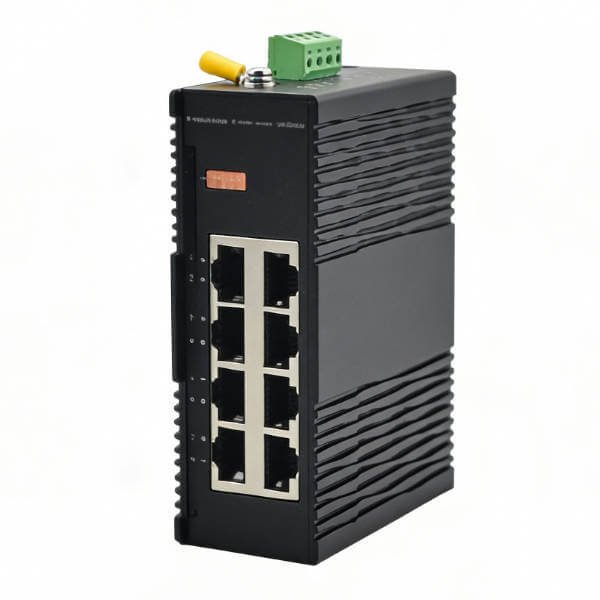
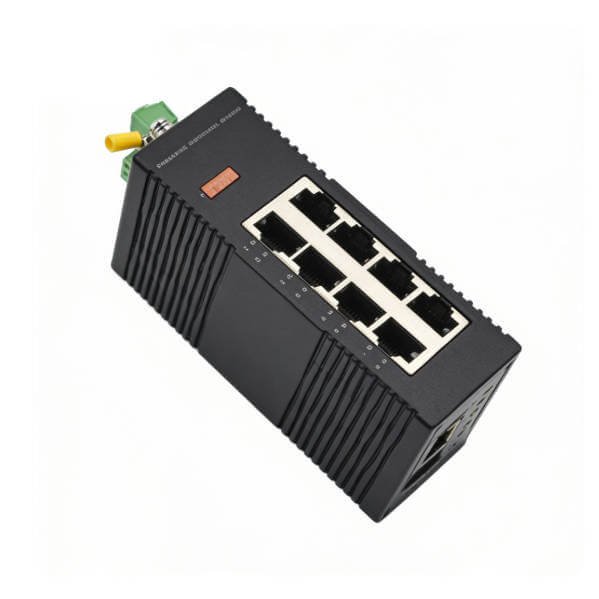
If you need a reliable 8-port solution, you should look for specific industrial certifications. You can find technical specifications for a rugged unmanaged industrial gigabit switch on our platform. This model includes professional-grade surge protection and a wide operating temperature range. Using professional-grade hardware prevents the costly downtime associated with standard commercial network failures.
Conclusion
In summary, an unmanaged industrial gigabit switch is the cornerstone of reliable industrial networking. It offers the durability and simplicity needed for the most demanding environments. By choosing an industrial switch with redundant power input and railway certifications, you protect your investment against power and vibration issues. Selecting the correct DIN rail mount gigabit switch 12V/24V/48V ensures long-term stability for your automated systems.
FAQ
1. What is the difference between a managed and an unmanaged industrial gigabit switch?
An unmanaged switch is plug-and-play and requires no configuration. A managed switch allows you to configure VLANs, traffic prioritization, and security settings. Unmanaged switches are better for simple, high-speed connectivity where software management is not required.
2. Why is redundant power input important in a factory?
Factories often have electrical surges or localized power outages. An industrial switch with redundant power input uses two power sources to ensure the network never goes down. Power redundancy is a low-cost insurance policy against data loss and system stops.
3. What does “railway compliant” actually mean for a switch?
It means the device has passed rigorous testing for fire safety, vibration, and temperature extremes. Railway compliant industrial ethernet switches follow EN 50155 or EN 50121 standards to ensure passenger safety.
4. Can I use a DIN rail mount gigabit switch 12V/24V/48V with a solar power system?
Yes, most solar controllers output 12V or 24V DC. Because the switch supports a wide range, it can be powered directly by the battery bank without extra converters. Wide voltage support makes these switches ideal for remote outdoor monitoring sites.
5. Does an unmanaged switch support PoE (Power over Ethernet)?
Some unmanaged switches include PoE ports, while others do not. You must check the specific model to see if it provides power to devices like IP cameras. PoE-enabled unmanaged switches simplify installation by providing power and data through a single cable.
Reference Sources
IEEE Standards Association – IEEE 802.3: Standard for Ethernet.
International Organization for Standardization (ISO) – ISO 9001: Quality management systems.